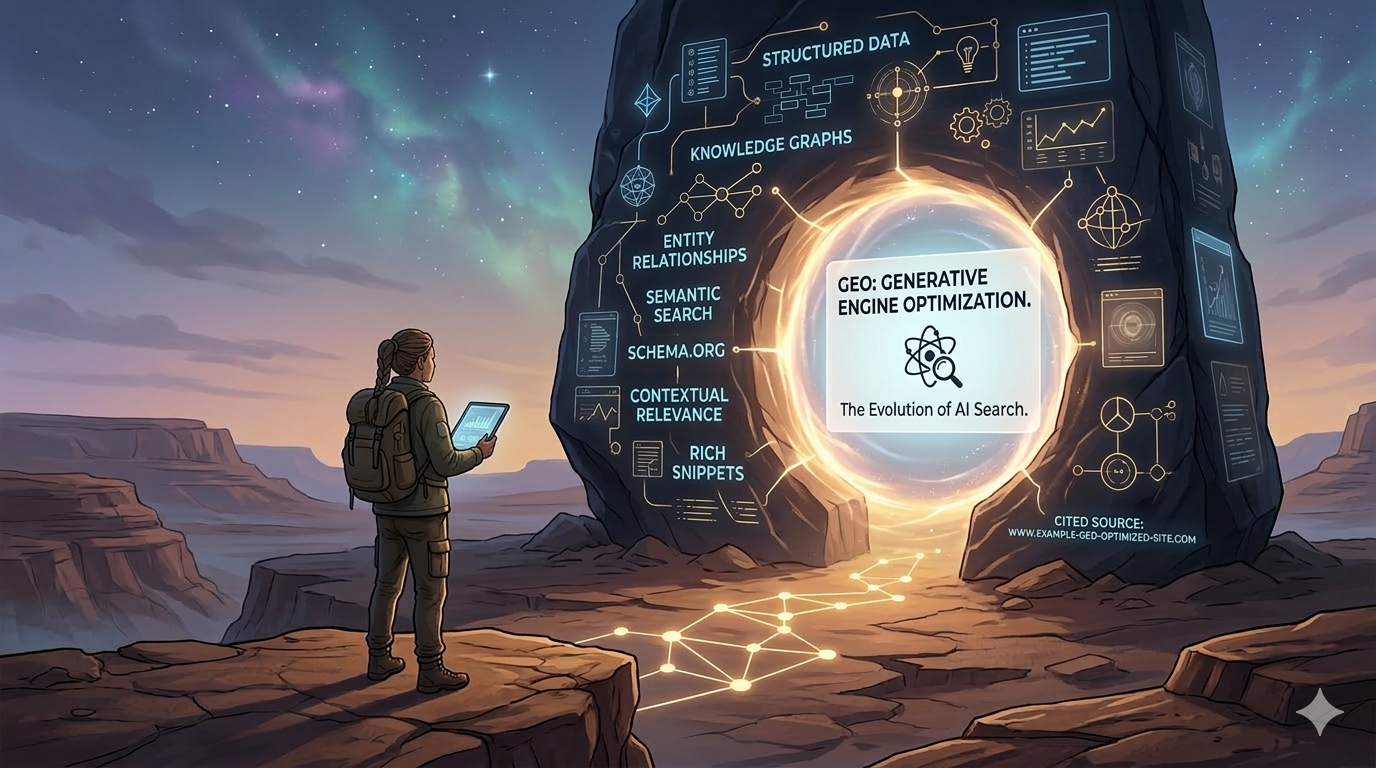
Search behaviors are changing. Instead of scrolling through pages of links, more people are turning to AI to get the information they need. And why shouldn’t they?
Traditional SEO was designed for search engine results pages. Today, this old digital marketing concept has been pushed to the wayside to make way for a new concept called Generative Engine Optimization (GEO).
Here’s what GEO is, how it differs from traditional SEO, and why it matters for content writers and marketers.
What Is Generative Engine Optimization (GEO)?
Generative Engine Optimization (GEO) is the practice of optimizing content so AI-powered tools can find, understand, summarize, and cite it in their responses.
But instead of optimizing content only for traditional search engines like Google and Bing, GEO focuses on optimizing it for AI-powered systems such as:
- ChatGPT
- Microsoft Copilot
- Google Gemini
When you ask questions in these systems, you receive answers compiled from multiple sources rather than just a long list of links. GEO helps ensure your content becomes one of the sources AI uses to generate those answers.
Why Search Is Changing, & Why GEO Exists
Search behavior is evolving for several reasons.
First, there’s the rise of conversational search. AI tools like ChatGPT have changed how people look for information. Instead of typing short keyword phrases, people are asking full questions. According to HubSpot, AI search queries average 23 words versus Google’s 4-word standard.
Second, AI-generated summaries are replacing traditional browsing. Rather than scanning multiple search results, users can often find the information they need directly within an AI-generated response.
For example:
Traditional search query:
best content marketing strategies
AI-style search query:
What are the best content marketing strategies for small businesses?
Instead of simply listing results, AI tools can now compile and synthesize information from multiple sources. This makes AI-powered search faster and often more convenient for users.
GEO vs Traditional SEO: How Are They Different?
| SEO | GEO |
| Optimizes for search-engine rankings | Optimizes for AI-generated answers |
| Drives website clicks | Drives citations in AI responses |
| Focuses on keywords | Focuses on clarity and authority |
| Competes for position in search results | Competes to be cited in AI summaries |
| Prioritizes backlinks | Prioritizes structured, interpretable content |
In short, traditional SEO focuses on helping pages rank in search results, while GEO focuses on helping content become part of AI-generated answers.
How Generative AI Finds and Uses Content
The technical details behind AI search may seem complex, but the process is actually pretty basic and straightforward.
First, AI systems scan websites to identify key information such as:
- Definitions
- Explanations
- Step-by-step instructions
Next, they extract and summarize relevant content by combining insights from multiple sources to generate a response. This is pretty much the same content creation process I use as a content writer! Only AI can do it much faster.
Finally, AI tools evaluate the credibility of sources. Content that appears authoritative, accurate, and well-structured is more likely to be prioritized and cited.
Best Practices for Generative Engine Optimization
So how can you, as a human content writer, optimize your content for GEO?
Write Clear, Direct Answers
AI systems prefer content that answers questions clearly and directly.
For example:
Question: What is generative engine optimization?
Answer: Generative Engine Optimization (GEO) is the practice of optimizing content so AI search tools can understand and cite it.
This format makes it easier for AI systems to extract and summarize information.
Clear answers and strong explanations have always been good writing practices—but with GEO, they’re becoming even more important.
Use Strong Structure
Content that looks messy, disorganized, or unfocused can be difficult for AI systems to interpret.
AI tools analyze content more easily when it includes:
- Clear headings
- Definitions
- Bullet points
- Short paragraphs (one to three sentences)
- Well-defined sections
- FAQ section
Fortunately, these structural elements are already considered SEO best practices. If you’re already writing this way, you’re probably on the right track.
Build Strong Topical Authority
AI systems lean toward sources that demonstrate deep expertise in a particular subject. One way to build this authority is to publish multiple articles around the same theme.
For example, someone writing about GEO might also publish articles such as:
- From Blue Links to AI Overviews: Why SEO Is Becoming GEO in 2026
- Why Reddit and Community Forums Are Emerging GEO Signals
- From Keywords to Context: Rebuilding Your Content Strategy for GEO
In content marketing, this strategy is known as building topic clusters, and it’s an effective way to establish authority within a niche.
Demonstrate Credibility & Expertise
AI systems also prioritize content that demonstrates expertise and reliability.
Strong content often includes:
- Clear authorship
- Transparent sources
- Well-supported claims
- Thoughtful explanations
These principles closely align with Google’s E-E-A-T (Experience, Expertise, Authoritativeness, and Trustworthiness).
Content that follows these principles tends to perform well for both traditional SEO and GEO.

What Does GEO Mean for Content Writers?
The rise of generative AI has significantly changed the role of content writers. We’re called content strategists now, apparently.
Today, us writers need to:
- Structure information strategically
- Anticipate user questions
- Create clear, authoritative explanations
- Develop content that AI systems can easily interpret and summarize
In other words, writers are no longer just producing content—we’re designing information.
Ironically, AI search may actually increase demand for high-quality human writing. After all, AI systems still need reliable, well-written content to learn from and cite.
Is GEO Replacing SEO?
Does this mean traditional SEO is disappearing? Not at all.
GEO is expanding SEO—not replacing it.
Traditional search is still widely used, and AI tools continue to rely heavily on indexed web content. In many cases, content that performs well in SEO—clear, authoritative, well-structured content—also performs well in GEO.
For now, the most effective strategy is to optimize for both.
Closing Thoughts
AI-driven search is changing how people discover and consume information. Adapting early to these changes may give you a significant advantage over your competitors.
Do you need help implementing generative engine optimization practices on your website? I’d be happy to help—contact me and let’s get started.
Last Updated on April 13, 2026 by Sarah Morris


Leave a Reply