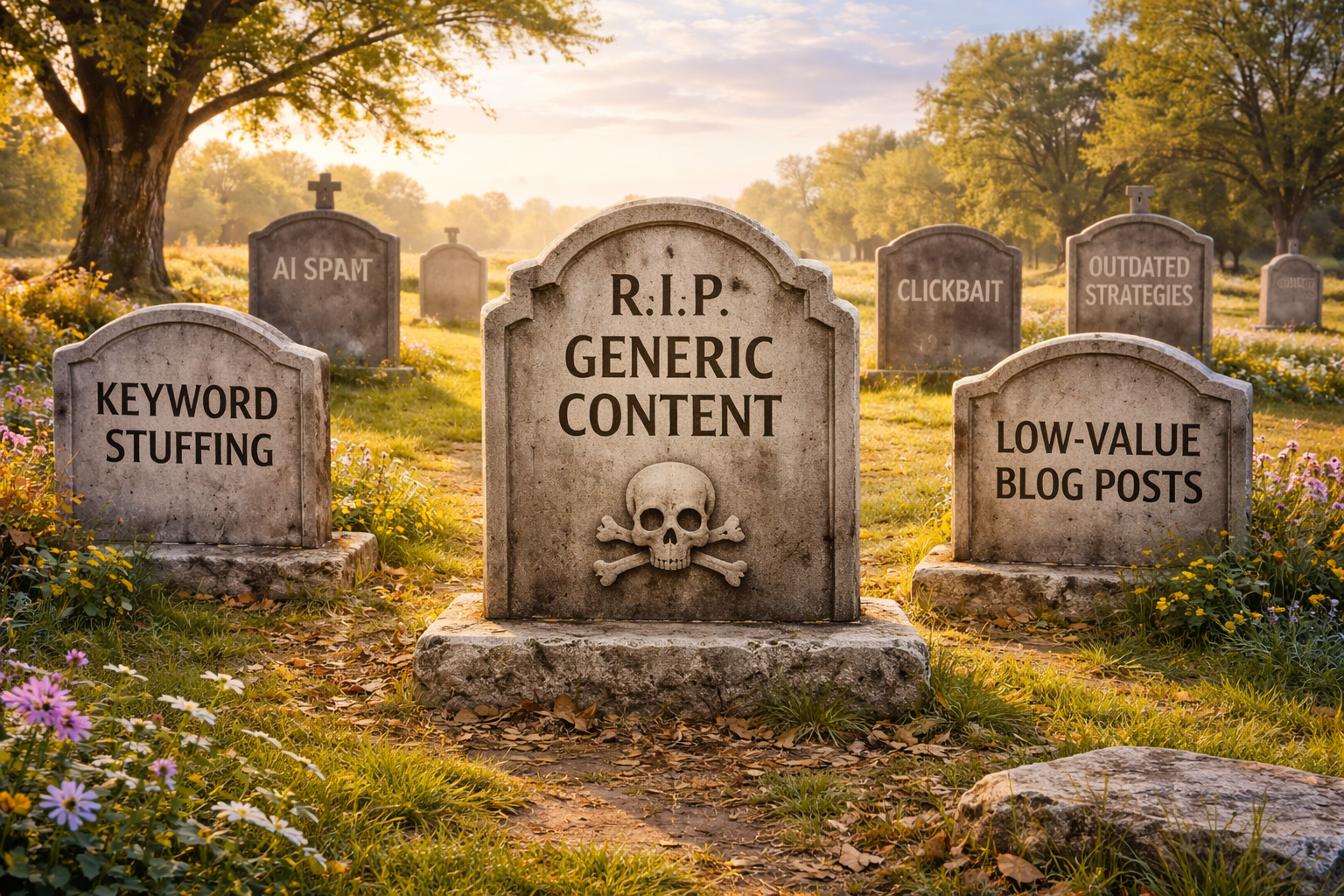
“Blogging is dead.” I’ve been seeing that phrase everywhere since generative AI took off.
It certainly feels like blogging is dead, doesn’t it? AI, short-form video, and social media make it feel like blogging has been killed off for good.
But when you start looking into it, blogging isn’t dead after all. I’ve noticed distinct differences between the blogs that are “dead,” and those that continue to thrive.
Why Does Everyone Think Blogging Is Dead?
There’s about a million reasons people think blogging is dead.
First, short-form video content is all the rage right now. It’s exploding and continues to grow. In one survey of 1,000 people, 73% admitted to watching short-form videos several times a day. YouTube Shorts, TikTok, and Instagram Reels are the most popular platforms.
Second, social media platforms continue to steal everyone’s attention. Endless scrolling, autoplay features, and algorithm-driven feeds are far more addicting than intent-based content, which requires users to actually search for data on their own.
Third, AI can generate articles within seconds. Many people think human bloggers are obsolete because AI can do it now.
Lastly, millions of blog posts are published every day. Sometimes, it feels like you have to wade through a lot of garbage to find quality content. The internet is literally drowning in content, and not all of that content is good.
If you’re publishing blog posts but not seeing traffic, it’s easy to assume blogging is dead and outdated. But that may not be the real problem.
The Real Problem—Most Blogs Add No Value
The hard, cold truth is that most blogs use outdated strategies. That’s why they’re failing.
Common issues include:
- Writing for keywords instead of people
- Repeating information that already exists
- Publishing generic, surface-level content
- Ignoring search intent
- Lacking authority or real experience
Content with these features doesn’t just underperform—it becomes lost and invisible.
Search engines and readers have evolved. These days, they’re looking for content that means something. They’re looking for content that delivers real value and clear meaning.
The Shift from Keywords to Meaning
Keywords alone are no longer a primary focus for search engines.
Today, search engines check to see if your content fully answers the user’s question or intent, instead of checking to see if it has the right keywords. They also consider context, intent, and relationships between ideas.
This is where concepts like topic depth, authority, and entity relationships come in. These factors matter far more than keyword density ever did.
In short, successful blogs don’t just target keywords—they provide value, meaning, and understanding.
What Do Successful Blogs Do Differently?
If you pay close attention, the blogs that are thriving right now share a few common traits.
Successful blogs:
- Are easy to scan, read, and understand
- Focus more on clarity than on being clever
- Cover specific topics comprehensively
- Demonstrate real expertise
- Are structured for both humans and search systems
- Focus on building trust, and not on growing traffic
Blogging isn’t really dead—it’s just maturing and evolving. Low-effort content is fading out and becoming invisible, while high-value content is rising to the top.
You can’t just publish content anymore. You have to publish useful content.
What’s Considered “Useful Content”?
The concept of creating “useful content” sounds simple. Unfortunately, this is where some blogs fall short.
“Useful content” isn’t a one-size-fits-all concept. It really depends on the audience, intent, and context.
For instance, some think useful content should be long, detailed, and packed with relevant keywords. Others think useful content should be short and to the point, as long as it’s helpful.
Regardless of what you think it means, useful content does one thing really well: it helps your readers accomplish something.
That could mean:
- Answering questions clearly
- Solving real problems
- Explaining complex or confusing things in simple ways
- Helping someone make a decision
These are all strong outcomes—and truly useful content delivers on them.
What Are Traits of Truly Useful Blog Content?
Useful blog posts have several traits in common:
They fulfill the user’s intent. Useful blogs cater to the user’s intent—whether it be answering a question, comparing options, or providing step-by-step instructions.
They add something “new.” Many blogs with similar titles also feature near-identical content. It’s just been reworded slightly from one post to the next. Better explanations, better structure, and real-world insight are examples of “new” content that make useful blogs stand out.
They’re easy to read and navigate. Content is useless if it’s too difficult to comprehend, or hard on the eyes. Useful blogs, however, use clear headings, short paragraphs, and guide readers smoothly from one idea to the next.
Keep these traits in mind when writing your next blog post—regardless of whether it’s for business or pleasure.
Final Thoughts
Blogging is still a great marketing strategy, but only if it’s done well. It remains one of the best ways to establish yourself as an industry authority and turn leads into customers (if that’s your goal).
Blogging isn’t dead, but it isn’t entirely forgiving, either.
The blogs that are failing right now are stuck in the past. They’re still focusing on keywords and junky content, and they’re promoting it repeatedly, hoping for traffic.
In comparison, successful blogs are truly helping people by keeping them informed and providing clear information. Blogs that are helpful and useful will keep being successful, even as the internet continues evolving.
If your blog isn’t getting results, it might not be totally dead—it may just need a better strategy. If you’re trying to figure that out, I’d love to help.


Leave a Reply